Trump Wants to Rescind the Roadless Rule. What Does That Mean?
Conservationists say the move would reverse years of progress in protecting the nation’s wild spaces
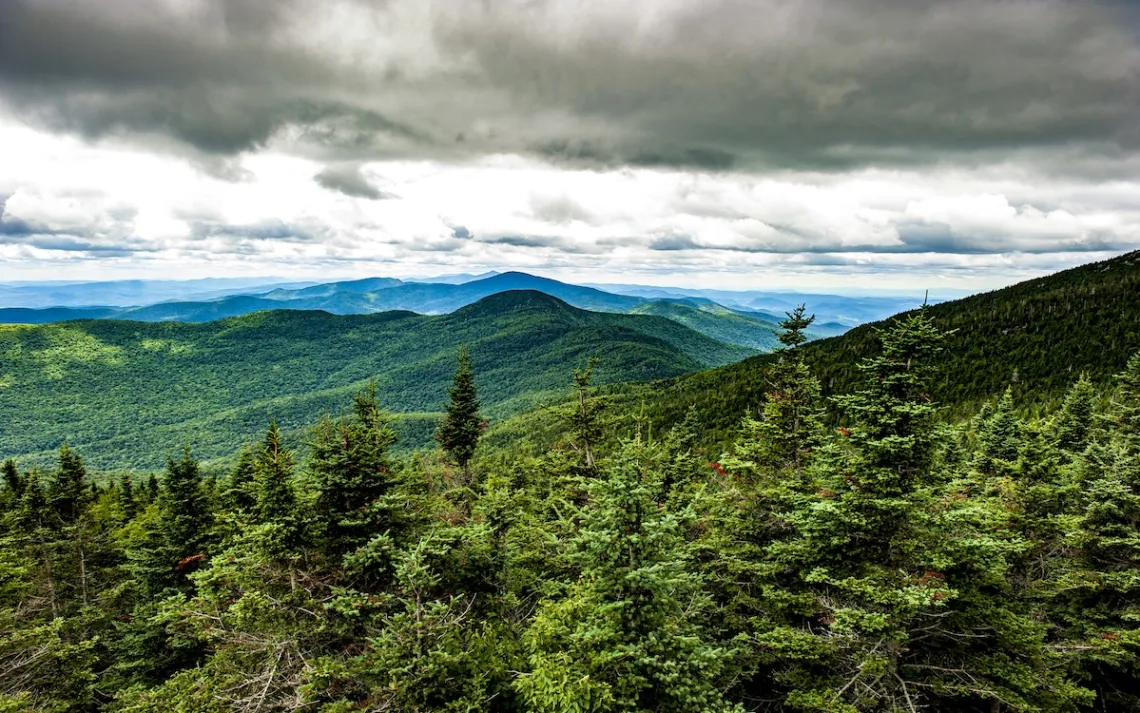
Photo by Judd Brotman/iStock
Most conservationists of a certain age have a Roadless Areas story. Mine began with a move to Oregon in the year 2000, and continued on trips with advocacy groups to visit forests where contentious timber plans had been planned. On one of those visits, I wrote a postcard in support of Roadless Areas—I didn’t yet own a computer—and remember feeling the weight of responsibility. These were my public lands.
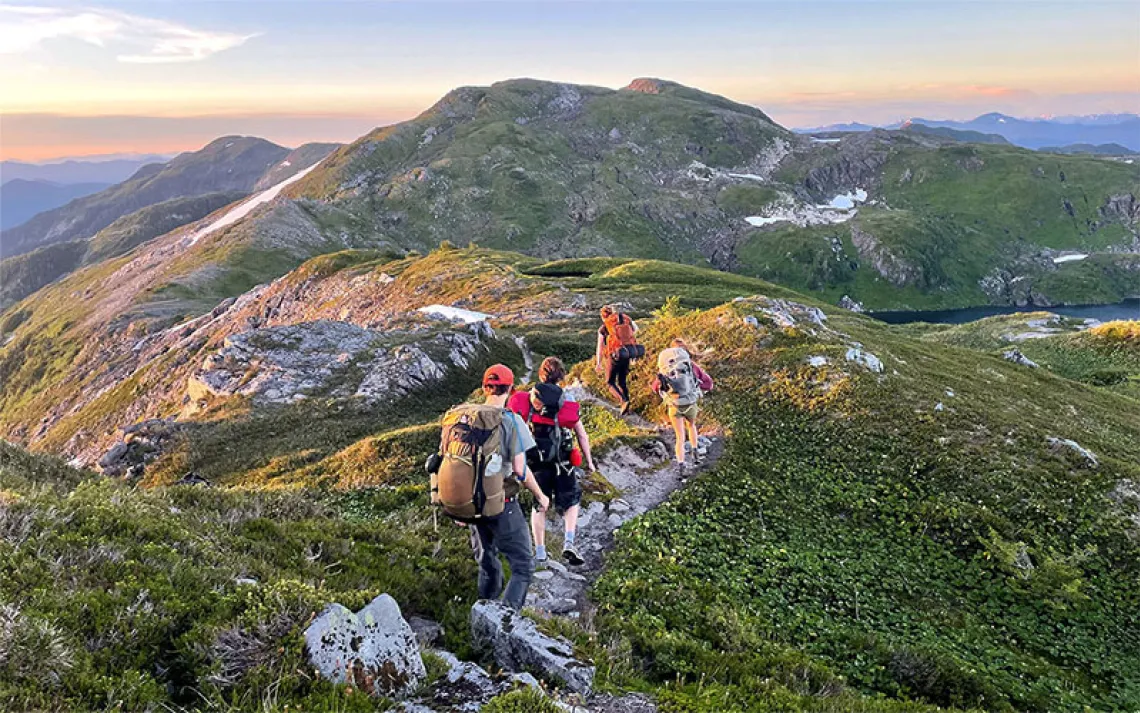
For nearly 25 years, the Roadless Area Conservation Rule has protected over 58 million acres of national forestland from new road construction, reconstruction, and most timber harvesting. There are Roadless Areas in 39 states, including 80,000 acres in Vermont’s Green Mountain National Forest; nearly a quarter of New Mexico’s Gila National Forest; and 9 million acres of coastal rainforest in Alaska’s Tongass National Forest.
On June 23, Agriculture Secretary Brooke Rollins announced that her agency is rescinding the Roadless Rule, calling it “overly restrictive” and “outdated.” Rescinding it, Rollins promises, will “remove prohibitions on road construction, reconstruction, and timber harvest … allowing for fire prevention and responsible timber production.”
Rollins is using two of Donald Trump’s executive orders to justify the move: One demands expanded timber production; another calls for making wildfire prevention and response more effective, in part by easing burdensome rules and regulations.
But these justifications betray ignorance about the lands the Roadless Rule protects and the reasons the rule was created.
A legacy of logging and roads
The Roadless Area Conservation Rule was established in 2001 following decades of unrestrained logging that left an $8.5 billion backlog of deferred maintenance on its vast network of roads. The rule protected the best of what was left—acreage that wasn’t protected as wilderness, but that was relatively intact and undeveloped.
The value of intact ecosystems “is not in timber; it's not measured in dollars and board feet,” says Alex Craven, forest campaign manager at Sierra Club. “It's measured in drinking water supply; it's measured in climate value; it's measured in species habitat; it's measured in recreation value.”
Rollins’s retrograde proposal doesn’t just ignore the multi-layered benefits Roadless Areas provide; it also ignores the transformation of the Forest Service’s culture and mission over the last quarter century.
The Forest Service was not always in the business of large-scale logging. Timber production in national forests ramped up after World War II to fuel the post-war boom. More logging led to more roads; more roads spurred more logging. The boom upended the Forests Service’s business model and the agency became dependent on timber sale revenues to fund its biologists, research, and recreation specialists.
By the 1980s, the harvest had spiked, at times exceeding 12 billion board feet per year.
“I think everybody knew that the rate of harvest on national forest was unsustainable,” says Mike Dombeck, who served as chief of the Forest Service from 1997 to 2001. “There was a recognition that we were losing habitat for endangered species at a rapid clip.” Though less emphasized, watershed health was also suffering.
At the same time, a new perspective focused on ecosystem management was unfolding. Agency leaders were beginning to recognize other values—outdoor recreation, wildlife habitat, and tourism—on par with timber production.
Shortly after he was appointed, Dombeck declared a temporary moratorium on new road building in roadless areas. Later that year, President Bill Clinton instructed the Forest Service to begin rulemaking to protect these forests. The rule followed two nationwide efforts to inventory roadless areas for their wilderness potential. In many cases, especially in the West, these were tracts of at least 5,000 acres high in the watersheds, where soils were thin and eroding. Many were also sites of contentious proposed timber sales. The rulemaking process included robust public engagement. The agency received 1.8 million public comments, the vast majority in support of the rule. Many wanted its protections to go even farther.
In the years since, the Roadless Rule has survived several attempts to erode it, including early attacks by the Bush administration. Even so, the rule has largely succeeded in protecting habitat and water quality.
Sixty million Americans rely on national forests as their drinking water source. Americans are increasingly recognizing the importance of watershed protection, especially in the West as droughts intensify. Intact forests provide the best water quality, while logging and construction degrade streams through erosion and removal of the natural filtration system of trees and vegetation.
Salmon and trout rely on undammed, unlogged streams for their very survival. “The most productive salmon fisheries it the world are in these wild places,” says Dombeck. “Where do the elk hunters want to go? Wilderness areas, roadless areas. That's where the trophies are.”
The Trump administration is citing in part the need to quell wildfires to justify building more roads. But the Roadless Rule already contains provisions that allow for roadbuilding, firefighting activity, and ecological thinning to lower wildfire risk.
The road(less) forward
The Roadless Rule revocation is part of a suite of actions the Trump administration has taken to disempower and deregulate the Forest Service, from mass firings and forced resignations to attacks on safeguards like NEPA and the Endangered Species Act. The Forest Service has lost around 5,000 employees through deferred and early retirements.
“You reduce the budget, and then suddenly, what happens next?” says Dombeck. “You've hollowed out the agency so it's really incapable of doing its work.” Dombeck and six other former chiefs wrote an op-ed speculating about the end game of this chaotic strategy: the divestment and transfer of public lands to private interests.
“The tactic is to starve the agencies so that they can't do the job and then say, 'This is another example of government bureaucracy,'” says Craven. “Government can't handle the load that they're being asked to handle, so you have to privatize in some form or another.”
More difficult could be tracking what happens in roadless areas should Trump’s deregulation agenda succeed, according to Susan Jane Brown, principal at Silvix Resources, a nonprofit environmental law firm. “If the agency uses a categorical exclusion to conduct logging in a roadless area or build a road or a dam or any other kind of infrastructure in roadless area, the public may not know about it, and therefore [won’t] be able to comment on it,” she says.
In any case, “You can't just wave a magic wand and get rid of a duly enacted piece of federal legislation or regulation,” says Brown. Undoing it will require a rulemaking process that includes public notice and comment and environmental analysis under the National Environmental Policy Act and the Endangered Species Act, as well as national Historic Preservation Act consultation with tribes and states. Brown adds that there is a long administrative record justifying the Roadless Rule. Reversing it requires a rational explanation that judges will accept.
Many management plans for specific national forests, especially those revised since 2012, have incorporated the Roadless Rule. These changes reflect an agency-wide shift to adaptive management, with an emphasis on collaboration, science, and long-term sustainability. You can't just get rid of those provisions, says Brown. “Much like getting rid of the Roadless Rule itself, you have to go through a similar process for changing forest plans if that's what you want to do.”
According to Dombeck, it makes little sense to imagine the United States returning to the heyday of timber harvesting. “The Forest Service of today is not the Forest Service of the 1980s or 1990s,” he says. “You’ve got a whole set of employees now that were trained differently.” Today’s foresters, wildlife managers, and fisheries biologists are focused on the health of ecosystems and watersheds over time, not on getting the cut out.
Dombeck points to the forest outside his window in northwestern Wisconsin as an example. Clear-cut at the turn of the 20th century, it’s since recovered. He won’t live long enough to see this tract take on the characteristics of an old-growth forest, but his great-grandchildren might. “We're talking about not just decades, but centuries,” he says.
That is a legacy worth fighting for.